You must be at least 18 years of age to enter this site. By entering our site, you affirm that you understand and comply with our age restrictions. If you are not 18+ years of age, please exit immediately. Thank you.
5 Entry-Level Military Surplus Firearms for New Collectors
Key Takeaways: For new collectors entering the military surplus (milsurp) market, five firearms from WWI through the early Cold War offer the most accessible, well-documented, and historically significant entry points: the Mosin-Nagant as the universal starting rifle; the M1 Carbine as an accessible American milsurp available through the Civilian Marksmanship Program (CMP) and reputable auction houses; the Lee-Enfield No. 4 Mk I for Commonwealth history at reasonable prices; the M1 Garand as the authenticated American flagship; and the Winchester Model 12 Trench Gun as the aspirational next step into U.S. combat shotguns. Matching serial numbers, authentic arsenal marks, and original finish are the largest drivers of value in this category. Above all else, buy the gun, not the story — undocumented “bring-back” claims add no value without DD Form 603 capture papers tied to the serial number.
Military surplus collecting rewards knowledge more than it rewards a deep wallet. A rifle that carried a soldier across Europe, a carbine that saw the Pacific, a shotgun that fought through Vietnam — each remains attainable for collectors willing to learn before they buy. The difference between a sound purchase and an expensive mistake is almost always information the buyer acquired before the firearm changed hands. This guide ranks five accessible entry points into milsurp collecting, ordered from accessible to “aspirational,” with two bonus picks worth considering as your collection grows.
#1: Mosin-Nagant — The Gateway Rifle
Adopted in 1891 and produced in roughly 37 million examples across Russia, the Soviet Union, Finland, China, and half of Eastern Europe, the Mosin-Nagant is the most-produced bolt-action rifle in history. It’s also the most accessible entry point into milsurp collecting.
Mosin-Nagant 1899 Hex Receiver
Why it’s #1: Availability, affordability, and still-abundant 7.62×54R ammunition combine to make the Mosin the consensus starting point. The most common variant, the M91/30 long rifle, saw service from before WWI through the Cold War. Shorter M38 and M44 carbines offer variety for collectors who prefer compact rifles. Finnish variants like the M39 “Ukko-Pekka” built by SAKO and VKT represent the premium-but-still-accessible tier and are widely regarded as the finest Mosins ever made.
What to look for: Most Mosins on the U.S. market are Soviet arsenal refurbs. Legitimate armorer-level rebuilds identifiable by shellac-dipped stocks, electro-penciled force-matched bolts, and boxed refurb cartouches. Refurbs are not parts guns; they’re historically legitimate service rifles, just less valuable than unissued originals. Hex receivers (pre-1936) command a premium over round receivers. Finnish “SA” in a box stamp denotes Finnish Army service and generally adds value.
Red flags: Drilled-and-tapped receivers (someone’s scope project), cracked wrists behind the receiver tang, and “sniper” variants with suspicious scope mounts. Pre-1942 PU snipers essentially do not exist, and fakes are rampant.
#2: M1 Carbine — The American Accessible Pick
The M1 Carbine is arguably the single best American entry-level milsurp. Lighter and handier than the Garand, chambered in the milder .30 Carbine cartridge, and produced by ten wartime manufacturers including Inland, Winchester, Underwood, Rock-Ola, IBM, Saginaw, and Quality Hardware, it offers genuine collecting variety at a price point below the Garand.
Why it’s #2: The M1 Carbine is available through the Civilian Marksmanship Program (CMP) — the federally chartered, authenticated channel for surplus U.S. military rifles. While supply is more limited than CMP’s Garand inventory, authenticated carbines offer the same peace-of-mind purchase experience: inspected, test-fired, and properly headspaced.
Universal M1 Carbine
What to look for: Manufacturer variety is the appeal here. A collector can build a small library of carbines and have a substantive collection without breaking the bank. Check for correct barrel and receiver manufacturer pairings (mixing is common due to arsenal rebuilds), proper stock cartouches, and matching adjustable vs. flip rear sights based on production era.
Red flags: Post-war commercial conversions (Universal, Plainfield, Iver Johnson) are not U.S. military M1 Carbines despite similar appearance. These have no collector value as milsurp. Also watch for M2 (select-fire) receivers converted to semi-auto — legal ownership depends on proper paperwork, and the variant carries different collector considerations.
Key terminology: A Curio & Relic (Type 03) FFL costs $30 for three years and lets collectors receive C&R-eligible firearms shipped directly to their home from any FFL holder willing to do so — including KIKO, which ships directly to verified C&R holders on eligible consignments. Most M1 Carbines qualify, making this a worthwhile credential early in your collecting journey.
#3: Lee-Enfield No. 4 Mk I — Commonwealth Heritage
Adopted in 1941 and produced through the early 1950s at Enfield, BSA, Long Branch (Canada), and Savage (U.S.), the Lee-Enfield No. 4 Mk I served British Commonwealth forces through WWII, Korea, and into counterinsurgency conflicts well beyond. Its predecessor, the SMLE No. 1 Mk III of WWI fame, is equally collectible and operates on the same cock-on-closing action that gives Enfields their famously smooth bolt throw.
Why it’s #3: Sporterized Enfields are everywhere, which sounds like a negative but actually keeps prices on original-configuration rifles reasonable relative to equivalent German or American bolt guns. A collector willing to hunt for an intact military-configured No. 4 can find one at accessible pricing. The 10-round detachable magazine and smooth action make the Enfield a pleasure to shoot, and .303 British ammunition remains commercially available.
What to look for: Verify the rifle hasn’t been sporterized and restored. A skilled restorer can return a cut-down rifle to military configuration, but the result isn’t the same as an untouched original. Check stock furniture for matching wood (military rifles had specific handguards and forends), confirm the rear aperture sight is intact and functional, and look for clear manufacturer markings on the receiver socket.
Red flags: Replaced stocks (common), missing handguards, drilled-and-tapped receivers for civilian scope mounts, and “Irish Contract” or “Indian Ishapore” rifles mis-represented as standard British service. The Ishapore 2A/2A1, a post-independence Indian variant chambered in 7.62 NATO, is a related but distinct collecting category.
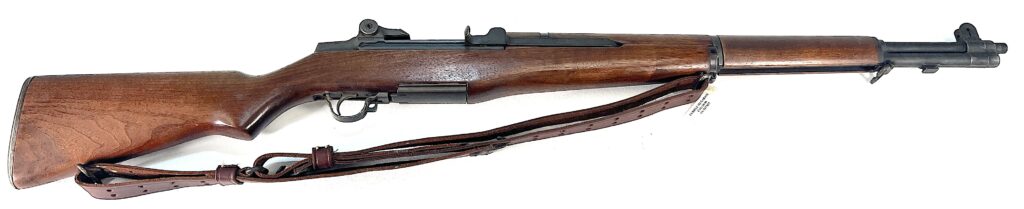
#4: M1 Garand — The American Flagship
“The greatest battle implement ever devised” — Patton’s famous assessment still resonates. Adopted January 9, 1936, the M1 Garand served through WWII and Korea with roughly 5.47 million produced across four makers: Springfield Armory, Winchester, Harrington & Richardson, and International Harvester. It remains the most thoroughly documented American service rifle ever made.
Why it’s #4: The Garand sits slightly above the Carbine in price and complexity. CMP remains the primary federally chartered channel for Garands, offering authenticated Service, Field, and Rack grades, each inspected, headspaced, and test-fired, an ideal starting point for first-time buyers. Auction houses with strong milsurp expertise, including KIKO Auctioneers – Firearms, also handle authenticated Garands through estate consignments and private collection dispersals. Either path can deliver a correct-grade rifle; CMP offers a standardized grading program, while auction houses often surface rarer configurations and higher-condition examples that don’t appear in CMP inventory. It’s the American milsurp flagship — iconic, historically significant, and supported by a deep reference library and active collector community.
International Harvester M1 Garand
What to look for: Parts correctness. Drawing numbers stamped on the bolt (D28287), trigger housing (D28290), operating rod (D35382), and other components should match the receiver’s production era. Stock cartouches, SA/GHS for early Springfield, WRA/GHD for Winchester, authenticate original inspection. Most surviving Garands have been rebuilt at least once; rebuild stamps like RIA (Rock Island), AA (Augusta), or RRA (Red River) on the stock tell that story honestly.
Red flags: Fake gas-trap conversions (original gas traps exist only in the first ~50,000 rifles), “Tanker” Garands (a post-war commercial invention — no factory Tanker ever existed), M1C/M1D sniper fakes, and Blue Sky-imported Korean returns with billboard import stamps that hurt collector value.
Key terminology: Import marks are the importer, country, model, and caliber stamps required under the 1968 Gun Control Act. ATF tightened depth and height standards in 2002, which is why post-2002 imports wear the conspicuous “billboard” stamps collectors dislike.
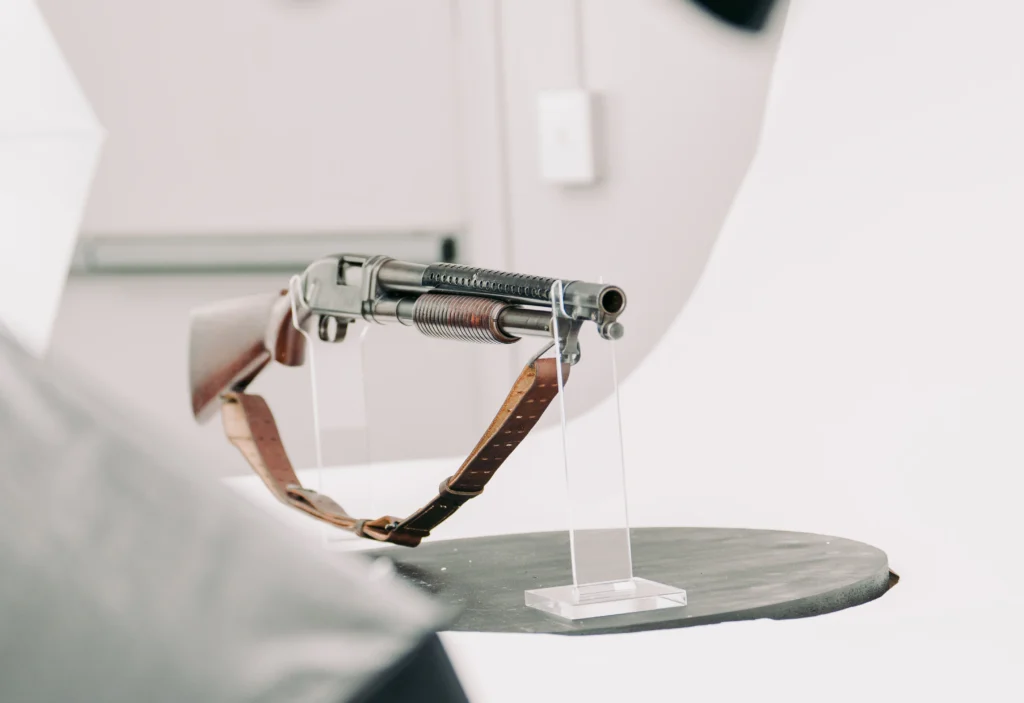
#5: Winchester Model 12 Trench Gun — The Aspirational Pick
The Winchester Model 12 Trench Gun represents a step up in both price and authentication complexity, but it earns the #5 spot because it’s the natural aspiration for collectors who want to expand beyond rifles into U.S. combat shotguns. Roughly 80,000 were purchased by the U.S. military between 1941 and 1944, serving through WWII, Korea, and into Vietnam.
Why it’s #5: The trench gun category combines genuine historical significance, Germany reportedly protested trench shotgun use as a war crime, with a serious authentication challenge that rewards careful study. Nearly two million civilian Model 12s were produced, and adding a reproduction heat shield to a civilian gun is straightforward. This makes the trench gun collector’s skillset directly transferable to other heavily-faked milsurp categories.
What to look for: Original WWII Model 12 trench guns had 20⅞-inch cylinder-bore barrels, four-row perforated heat shields (reduced from six in 1942), bayonet adapters for the M1917 bayonet, and sling swivels. Look for factory-applied “U.S.” and flaming-bomb ordnance stamps, a WB-in-box cartouche on the stock, and the crossed-cannon inspector mark.
Red flags: Any Model 12 or Model 97 marked MOD or FULL is not a military trench gun — all originals were cylinder bore. Missing or suspicious U.S. and flaming-bomb stamps, absent WB-in-box cartouches, or electro-pencil marks where factory stamps should be are all walk-away signals. Bruce Canfield’s reference on U.S. combat shotguns is the authoritative text for serious Model 12 study.
“The collectors who succeed in milsurp are the ones who start small and learn deeply. A Mosin-Nagant or M1 Carbine teaches you how to evaluate arsenal marks, spot refurbishment, and understand condition standards. Once you can do that confidently, a Garand or a trench gun becomes a thoughtful next step rather than an expensive guess.” – Chad Sylvester, Firearms Operations Manager
Worth Considering as You Grow
Two additional milsurp firearms deserve consideration once you’ve acquired one or two of the core five. These aren’t ranked, rather, they’re excellent directional options depending on where your collecting interests develop.
Bonus Pick: Carcano — The Overlooked Value Play
Italy’s Modello 1891, designed by Salvatore Carcano, served both World Wars and colonial campaigns. The family includes the full-length M91 infantry rifle, the M91/38 short rifle, the 1941 M91/41, cavalry carbines, and Troop Speciali (TS) variants. The 6.5×52mm Carcano cartridge is mild-recoiling and still loaded by Prvi Partizan and Hornady.
Carcanos are frequently the most affordable genuine WWII service rifle, in part because the JFK assassination (Oswald’s rifle was a 1940 Terni M91/38) gave the rifle an undeserved reputation for inaccuracy. Arsenal marks to know: Terni (largest producer), Brescia, Gardone V.T., FNA Brescia, Beretta (PB), and Torre Annunziata. Two Carcano-specific facts matter: the rifle uses a six-round Mannlicher en-bloc clip and will not feed properly without one, and bores run .267–.268 inches rather than the standard .264 used by other 6.5mm cartridges.
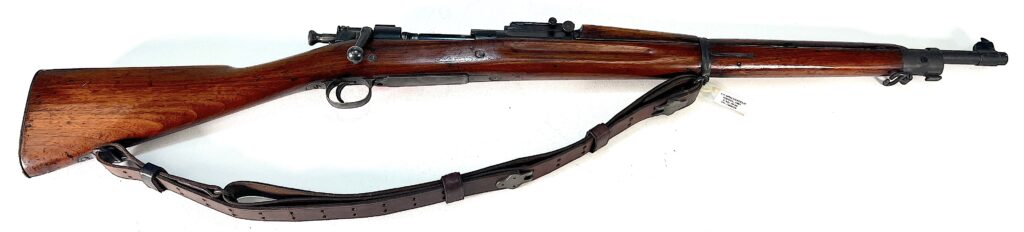
Bonus Pick: 1903 Springfield — The American Bolt-Action Legacy
The 1903 Springfield is America’s WWI service rifle, refined into the 1903A3 during WWII with stamped parts and simplified sights. Produced at Springfield Armory, Rock Island, Remington, and Smith-Corona, it offers classic American bolt-action heritage and has historically been available through CMP alongside Garands.
US Springfield Model 1903
For collectors who start with the M1 Carbine or Garand and want to go deeper into American service rifle history, the 1903 is the natural next step.
Before You Buy Anything, Inspect It
Every milsurp inspection should cover the same fundamentals regardless of which firearm on this list you’re considering: bore condition using a light, headspace with a FIELD gauge (if the bolt closes on FIELD, do not fire), cracks at the wrist behind the receiver tang, action function, and matching numbers at every serialized location. Learn the NRA condition grades — Excellent, Very Good, Good, Fair — so you can calibrate seller descriptions against objective standards. Ask about arsenal refurbishment history, corrosive-ammunition use, and whether the firearm has been drilled for optics. Walk away from drilled-and-tapped receivers, obliterated cartouches, or serial numbers that look freshly struck on aged metal. Auction houses with strong milsurp expertise — KIKO Auctioneers – Firearms included — pre-inspect consignments for matching numbers, import marks, and signs of rework before a rifle reaches the block, which is one of the practical advantages of buying through a licensed firearms auctioneer versus an unvetted private seller. The old maxim, buy the gun, not the story, exists because “bring-back” tales are worthless without DD Form 603 capture papers tied to the serial.
Frequently Asked Questions
What’s the best entry-level military surplus firearm for a complete beginner?
The Mosin-Nagant is the consensus first milsurp purchase. It remains the most affordable accessible to new collectors, with 7.62×54R ammunition still commercially available, deep historical pedigree spanning WWI through current conflicts, and a large community of collectors willing to help new buyers. Russian arsenal refurbs provide a legitimate, affordable entry point that still represents genuine service history.
Do I need a special license to buy military surplus firearms?
Most milsurp purchases go through a standard FFL dealer and require no special license. However, a Curio & Relic (Type 03) FFL, $30 for three years, lets collectors receive C&R-eligible firearms (generally 50+ years old) shipped directly to their home.
What is the Civilian Marksmanship Program (CMP)?
The Civilian Marksmanship Program is the federally chartered successor to the Department of Civilian Marksmanship. It’s the primary federal surplus channel for U.S. military rifles including the M1 Garand, M1 Carbine, and 1903 Springfield. CMP inspects, headspaces, and test-fires each rifle before sale. Eligibility requires U.S. citizenship, club affiliation, and proof of marksmanship activity (waived at age 60). CMP is a strong starting point for first-time buyers, but authenticated examples of these rifles also move regularly through reputable auction houses and private consignments.
What does “matching numbers” mean and why does it matter?
Matching numbers means the receiver, bolt, magazine, and other serialized components all carry the same serial number as originally assembled at the factory. It indicates factory originality and is the single largest driver of value in milsurp collecting, particularly on European service rifles. Mismatched numbers usually indicate either field replacement of parts or arsenal refurbishment.
Are arsenal-refurbished firearms worth collecting?
Yes. Arsenal refurbishment refers to legitimate armorer-level rebuild programs — Soviet FTR programs, Finnish reconditioning, U.S. rebuilds at Rock Island or Anniston. Refurbished firearms are legitimate service weapons with real military history, not parts guns. They’re less valuable than unissued all-matching originals but remain excellent entry points for new collectors.
How do I spot a fake or altered milsurp firearm?
Watch for drilled-and-tapped receivers, obliterated or re-struck markings, cracked stocks (particularly at the wrist), mismatched serial numbers on parts that should match, and finishes that look too fresh for the firearm’s claimed age. For specific categories like Winchester trench guns or Mosin-Nagant snipers, fakes are rampant. Study authoritative reference texts (Bruce Canfield for U.S. arms, Scott Duff for Garands) before spending serious money.
Where should I buy military surplus firearms?
The most reliable sources are reputable auction houses such as KIKO Auctioneers – Firearms, that pre-inspect and grade consignments, CMP for authenticated U.S. military rifles specifically, established milsurp dealers with clear return policies, and vetted collector classifieds on forums like Gunboards and the CMP Forums. Estate sales and gun shows can yield finds but require greater buyer expertise. C&R FFL holders have the additional advantage of direct shipping from FFL sellers, including KIKO, on eligible consignments.
Can I still shoot military surplus firearms, or are they just for display?
Most milsurp firearms can still be shot safely, provided they pass proper inspection including headspace checks with a FIELD gauge. Ammunition is still produced for most common milsurp cartridges. Collectors of unissued or all-matching examples typically don’t shoot them to preserve value, but shooting-grade refurbs are often range-used without hesitation. Note that much surplus ammunition is corrosive-primed and requires water-based cleaning immediately after shooting.
How should I store military surplus firearms?
Climate-controlled storage with stable humidity (30-50% RH) and temperature (55-70°F), light oiling of metal surfaces, and protection from direct light. Remove original cosmoline preservative before long-term storage, but don’t over-clean original finishes. Original wood finish is nearly always more valuable than a re-oiled or refurbished stock.