You must be at least 18 years of age to enter this site. By entering our site, you affirm that you understand and comply with our age restrictions. If you are not 18+ years of age, please exit immediately. Thank you.
The Weapon Germany Tried to Ban: Collecting the Winchester Model 12 Trench Gun
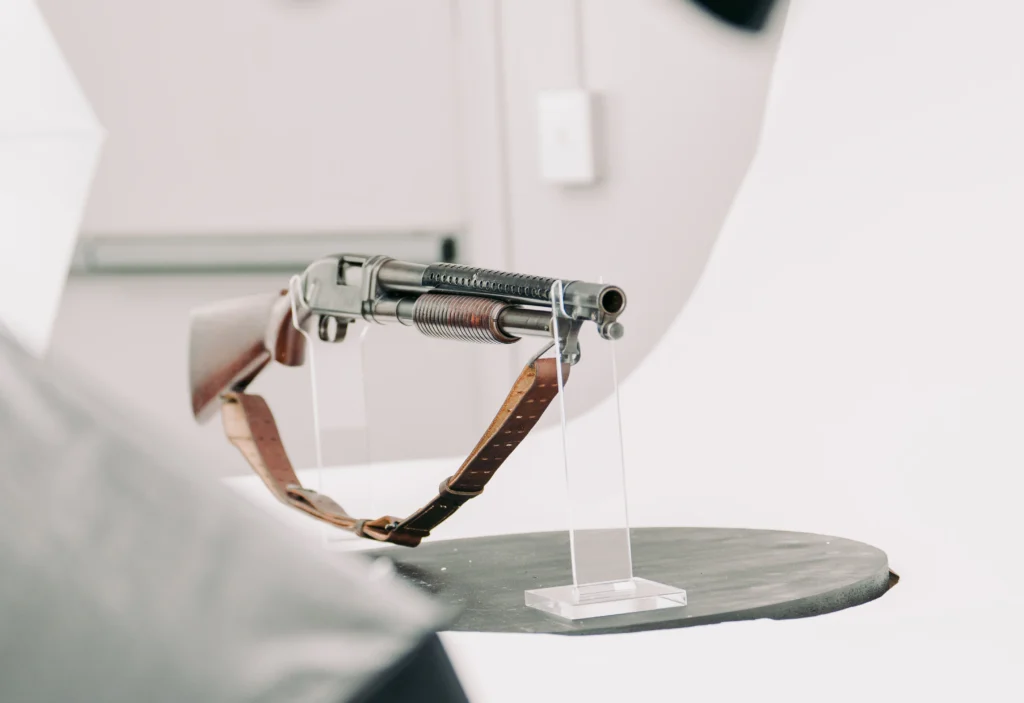
Key Takeaways: A WWII-era Winchester Model 12 Trench Gun recently sold at a KIKO Auctioneers – Firearms auction on January 8, 2026, for $8,050. This sale demonstrates the enduring demand for America’s legendary combat shotgun. Military-marked specimens routinely command ten to fifty times the value of commercial variants. Expert collectors estimate 95% of “trench guns” encountered at gun shows are fakes or assemblies.
That’s roughly twenty times what a standard commercial Model 12 fetches. And this wasn’t even a pristine example, just good honest condition with the right markings in the right places.
The Winchester Model 12 Trench Gun occupies a unique position in American military history. It’s the shotgun Germany formally protested as “inhumane” during World War I, going so far as to threaten to execute any American soldier captured carrying one.
It’s the weapon that swept trenches in France and bunkers across the Pacific. And today, it’s one of the most faked military firearms in the collector market.
“When 95% of the trench guns you see at shows are fakes or assemblies, an authenticated example with correct markings and serial range isn’t just collectible, it’s rare. The $8,050 result reflects what serious collectors will pay for the real thing.” – Chad Sylvester, KIKO Auctioneers – Firearms Operations Manager
The Shotgun That Started an International Incident
Winchester’s Model 12 arrived in August 1912 as designer Thomas Crossley Johnson’s answer to requests for a hammerless pump-action shotgun. Unlike John M. Browning’s earlier Model 1897 with its exposed hammer, Johnson enclosed the mechanism within the receiver, eliminating snag points while creating what Winchester marketed as “The Most Perfect Repeater.”
The shotgun’s slam-fire capability — holding the trigger while rapidly pumping the action — would prove devastatingly effective in combat conditions the designers never anticipated.
General John “Black Jack” Pershing recognized the combat potential of 12-gauge shotguns from his experience fighting Moro warriors during the Philippine Insurrection. When America entered World War I in 1917, Pershing ordered shotguns configured for trench warfare: barrels shortened to 20 inches for maneuverability; perforated steel heat shields to protect hands during rapid fire; and bayonet adapters compatible with the M1917 bayonet.
The results were devastating.
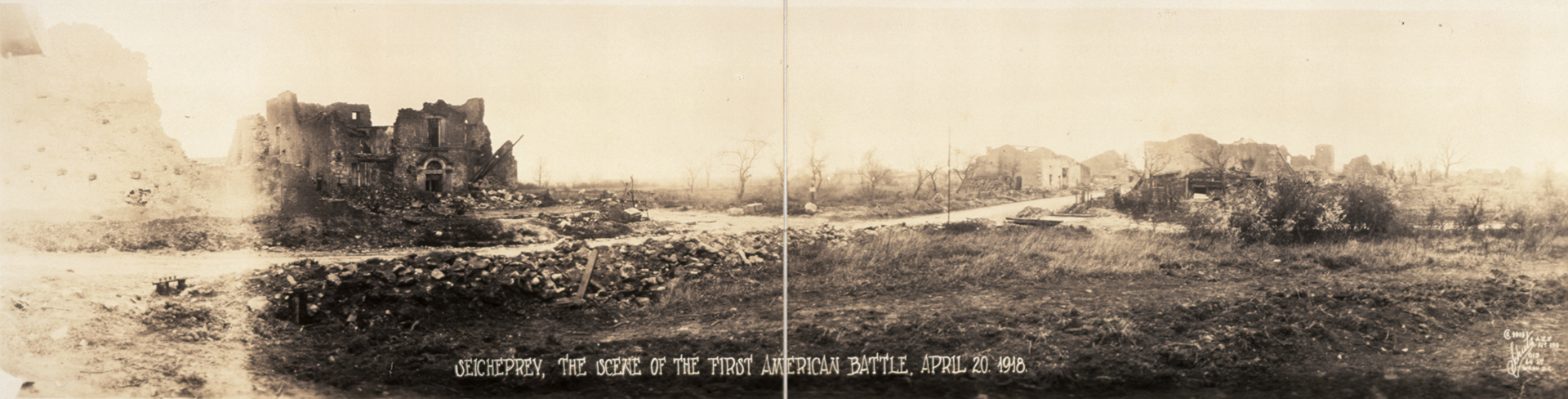
A soldier holding the trigger and pumping could deliver six blasts in under two seconds. American soldiers at Seicheprey, France, on April 20, 1918, employed trench shotguns in the first significant U.S. infantry engagement of the war, earning the weapon nicknames like “trench sweeper” and “trench broom.”
Image Source: Wikimedia Commons
Germany’s Protest and America’s Response
Germany’s reaction to the trench gun produced one of World War I’s strangest diplomatic confrontations.
On September 19, 1918, Germany delivered a formal protest through neutral Switzerland, citing Article 23(e) of the Hague Convention prohibition against weapons causing “unnecessary suffering.” The protest threatened that any American prisoner found with a shotgun or shotgun ammunition “forfeits his life.”
Secretary of State Robert Lansing’s response, informed by Brigadier General Samuel T. Ansell’s legal memorandum, rejected the protest entirely. Ansell argued that 00 buckshot pellets were functionally identical to .32-caliber bullets and no more cruel than shrapnel from artillery shells. The memorandum pointedly observed that Germany’s chlorine gas attacks, flamethrowers, and saw-toothed bayonets represented far clearer violations of the “unnecessary suffering” standard.
Germany never replied and no American soldiers were executed for carrying shotguns.
Pacific Theater Dominance
Military procurement of Model 12s expanded dramatically during World War II, with over 80,000 shotguns purchased for the Marine Corps, Army, Navy, and Army Air Forces. The Marine Corps deployed trench gun configurations extensively during Pacific island-hopping campaigns, where dense jungle vegetation and fortified bunker complexes created conditions similar to WWI trenches.
Production changes during wartime reflected material conservation and manufacturing efficiency. Heat shields transitioned from six rows of ventilation holes (WWI pattern) to four rows beginning in 1942. Late 1944 production introduced Parkerized finishes instead of commercial bluing, creating what are now among the scarcest and most desirable variants.
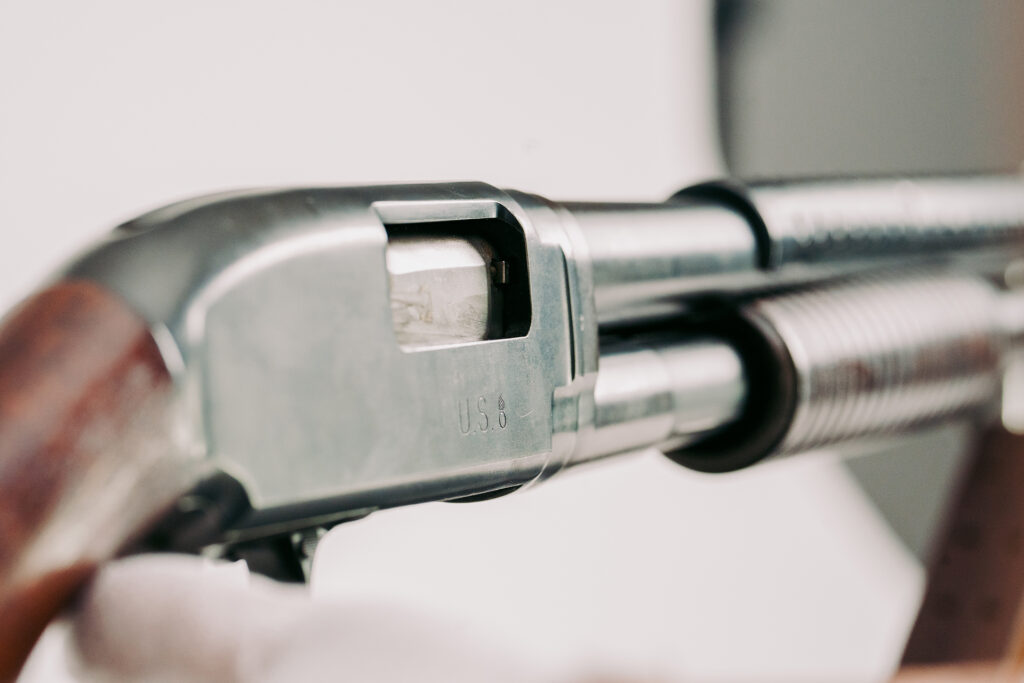
Expert collectors estimate that 95% of “trench guns” encountered at gun shows are fakes or assemblies. Complete die sets for stamping “U.S.” marks, flaming bomb proofs, and GHD cartouches have circulated for years, enabling convincing but fraudulent conversions. Reproduction heat shields and bayonet lugs provide the physical components to transform commercial shotguns into apparent trench guns.
That statistic isn’t hyperbole. It’s why authentication knowledge directly translates to thousands of dollars in value.
Serial Number Verification
Legitimate WWII Model 12 trench guns fall within the serial range of approximately 939,650 to 1,036,000, produced between spring 1942 and early 1944. Any specimen with a serial number below 939,500 claiming WWII military provenance demands extreme scrutiny. Numbers above 1,036,000 fall outside the military contract period entirely.
Red Flags to Watch For
Hand-stamped markings: Factory military markings were machine-rolled at Winchester, showing consistent depth, spacing, and alignment. Hand-stamped characters appear crooked, unevenly spaced, or varying in impression depth.
Magazine tube takedown holes: Authentic military Model 12s lack the takedown pin holes present on commercial variants. The presence of these holes immediately identifies a converted commercial shotgun—regardless of whatever military markings may have been applied.
Wrong barrel taper: Military trench barrels exhibit a straight taper from receiver to muzzle. Commercial barrels taper downward (thinner at the front). This represents one of the most reliable authentication indicators.
Mismatched heat shield patterns: Six rows of ventilation holes for pre-1942 production, four rows for 1942 and later. Condition discrepancies between the heat shield and the shotgun itself signal an assembled gun.
Wrong inspector cartouche: GHD (Guy H. Drewry) appears on trench guns after May 1942 with serials above 930,000. WB (Waldemar Broberg) marks appear on earlier production—finding WB on what purports to be a trench gun raises immediate concerns.
Suspiciously crisp markings: Extremely sharp stamps sometimes indicate recent fraudulent stamping rather than exceptional preservation. Original markings should show wear consistent with the firearm’s overall condition.
Common Fake Configurations
Cut-down field guns fitted with aftermarket heat shields and fake ordnance stamps represent the most frequent deception. Riot guns (which lack heat shields and bayonet lugs but do bear legitimate military receiver markings) retrofitted with reproduction hardware create particularly convincing fakes.
The 1950s-era Kleins Sporting Goods conversions created another category requiring awareness. Kleins purchased surplus military shotguns and converted them to long-barreled sporting configurations. Some have subsequently been “restored” with military hardware and fake markings.
Banned by Enemies, Beloved by Collectors
The Winchester Model 12 Trench Gun occupies rare ground in American military history: a weapon so effective that enemies formally protested its use, yet so well-designed that it served from 1917 through Vietnam and beyond.
Only an estimated 6,800 to 7,000 WWII trench gun configurations were produced. Factor in combat losses, arsenal rebuilding, and decades of attrition, and you understand why authenticated examples command serious money.
The challenge isn’t finding a Model 12 Trench Gun for sale.
It’s finding a real one.
That 95% fake rate isn’t going anywhere. But for collectors who do their homework, authentic specimens represent both tangible military history and sound investment.
Just ask whoever bought that $8,050 example in January.