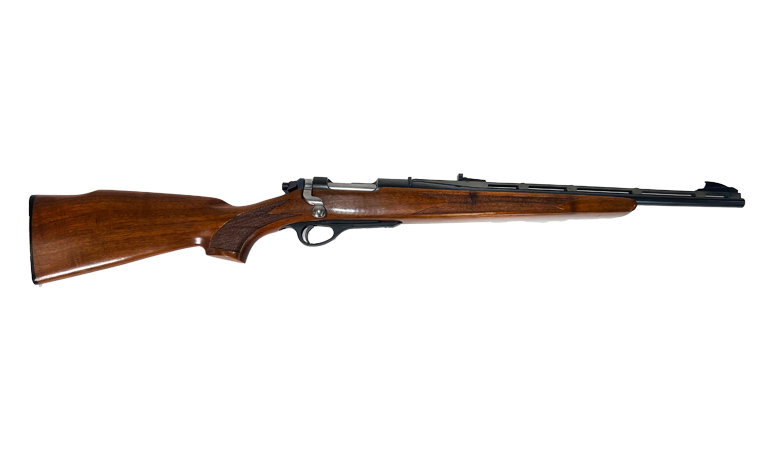
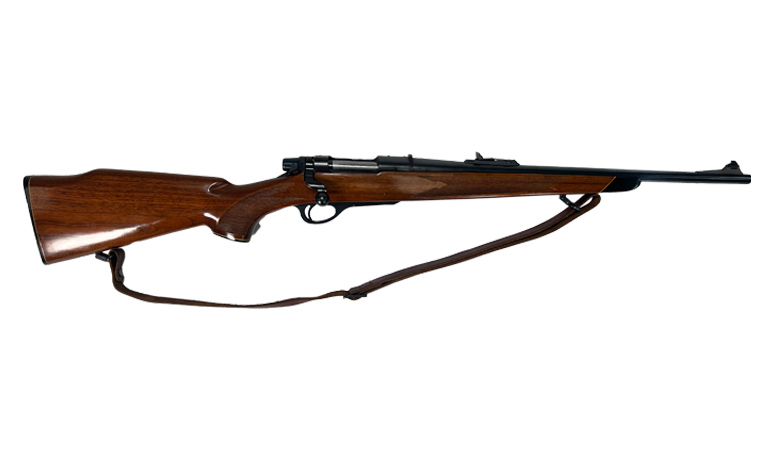
Key Takeaways: The Remington Model 600 and 660 in .223 are among the rarest American bolt-action rifles ever produced, with fewer than 500 manufactured combined. KIKO Auctioneers – Firearms recently sold authenticated examples of both, demonstrating continued strong demand for these increasingly scarce collector firearms. The Remington 600 sold for $4,374 and the 660 for $4,131.
Table of Contents:
In November 2025, a Remington Model 600 and a Model 660, both chambered in the coveted .223 Remington, crossed the auction block in Ohio.
The 600 sold for $4,374. The 660 brought $4,131. Combined, that’s over $8,500 for two rifles that Remington could barely give away in the 1960s.
Between these two models, Remington produced somewhere around 450 rifles in .223
Total. Ever.
Finding one is difficult. Finding one that’s actually a factory original and not a rechambered fake is harder. And having both sell through the same auction house is the kind of thing collectors talk about for years.
Whether you missed the auction, regret not bidding, or you’ve never heard of these rifles until now, here’s everything you need to know about why they matter, what makes them special, and what to look for if you’re hunting for one of your own.
The Numbers: Why These Rifles Are So Rare
The Remington Model 600 was produced from 1964 to 1968, with approximately 94,086 rifles manufactured across all available calibers.
The .223 Remington chambering?
Depending on which source you trust, somewhere between 227 and 315 left the factory, most of those in the final year of production.
The Model 660 followed from 1968 to 1971, with total production of 50,536 units. The .223 chambering was equally scarce: just 227 manufactured.
Why so few? The .223 Remington cartridge was still relatively new.
Developed in 1957 by Remington Arms and Fairchild Industries for what would become the M16 platform, it hadn’t yet achieved the ubiquity it enjoys today.
Most hunters and shooters of the era gravitated toward established calibers like .308, .243, or even the .222 Remington that the .223 was derived from.
That scarcity has translated directly into collector demand. Verified examples have sold anywhere from $1,500 to over $7,400, with pricing heavily dependent on condition, documentation, and whether the rifle is actually a factory original or a rechambered fake.
Two Rifles, Two Personalities
While the 600 and 660 share the same “three rings of steel” push-feed action (borrowed from the XP-100 pistol), they’re distinct rifles with different character.
The Model 600 was Remington’s original “guide rifle,” compact, light, and unmistakable. Its signature feature is the ventilated rib running the length of the 18.5″ barrel, a shotgun-inspired touch that gave it a look critics either loved or hated.
The dogleg bolt handle echoed Remington’s Model 1917 military rifle. At just 5 lbs. 8 oz. with an overall length of 37.25,” it was built to carry all day and shoot fast when it mattered.
The Model 660 refined the formula. The barrel stretched to 20″ and dropped the vent rib entirely. A blued bolt handle replaced the chrome-plated original, and black polymer fore-end tips with white-line spacers gave it a more conventional look. It weighed about a pound more and cost $20 extra at the time.
Same rare chambering, different collector appeal. The 600’s vent rib makes it instantly recognizable.
The 660 offers a cleaner aesthetic that some prefer.
Both are legitimate pieces of firearms history.
Ahead of Their Time
Here’s the paradox of the Model 600 series: they were commercial disappointments that became collector legends.
“These weapons were commercial flops in the 1960s. Now they’re bringing over $4,000 each at auction. That tells you everything you need to know about how the market has caught up to what Jeff Cooper recognized 60 years ago.“
Chad Sylvester, KIKO Auctioneers – Firearms Operations Manager
Remington’s marketing asked, “How do you make a carbine that pound for pound, hits harder, shoots straighter than anything in its class?” The answer was the 600. A rifle that “carries like a carbine, points like a shotgun, and shoots like a rifle.”
Critics, however, couldn’t get past the unconventional looks. While loved by the majority of its owners, the death knell of the original Model 600 was its looks. It shot exceptionally well, but critics couldn’t get over the aesthetics.
But one person saw what Remington had built: Colonel Jeff Cooper.
The father of modern practical shooting, Cooper acquired a Model 600 in .308 in 1966 and fitted it with a forward-mounted Leupold 2X extended-eye-relief scope.
That rifle became “Scout I,” the first prototype of what Cooper would develop into the scout rifle concept.
The plastic vent rib that critics mocked actually served a purpose on Cooper’s prototype, providing a mounting point for the forward telescope.
The very features that made the 600 a tough sell in 1964 made it the foundation for an entirely new category of firearm.
Colonel Jeff Cooper would use a Model 600 as the basis of a scout rifle prototype, and the design serves as an inspiration for scout- and guide-style bolt-action rifles up to this day.
Buyer Beware: Spotting Fakes
Now for the hard truth: if you’ve been shopping for a Model 600 or 660 in .223, you’ve likely encountered fakes.
Why? The .222 Remington and .223 Remington are dimensionally similar. A competent gunsmith can ream a .222 chamber out to .223 without much difficulty.
Many .222 Rem rifles of this vintage were rechambered to .223 Rem, often without any changes to barrel markings.
Red flags to watch for:
Barrel stampings hidden under the stock. If the caliber marking is only visible with the stock removed, someone may have re-barreled the rifle.
The “3” looks wrong. Some gunsmiths simply struck a “3” over the “2” when converting .222 rifles.
Look for misalignment or double-stamping.
Missing or removed serial numbers. Walk away. No exceptions.
Laminated stock on a non-magnum. The laminated walnut stock was only factory-original on the magnum versions (6.5mm Rem Mag and .350 Rem Mag).
No provenance. Original boxes, paperwork, and receipts don’t guarantee authenticity, but they help build the case.
What “right” looks like:
The two rifles KIKO Auctioneers sold in November were authenticated examples. Both showed approximately 85% original finish – the kind of wear you’d expect from rifles that were actually used in the field over several decades, not safe queens or recent fabrications.
The Model 600 displayed some expected thinning on high-contact points like the barrel and bolt handle, while the distinctive ventilated rib retained strong finish. The walnut stock showed handling marks, light scratches, and minor impressions consistent with decades of field use. The checkering on the forend and pistol grip remained largely defined with some flattening in high-contact areas.
The Model 660 showed similar honesty: light edge thinning on the muzzle and receiver high points, with minor handling marks on the polished stock. The checkering remained well-defined throughout.
These weren’t cosmetically perfect rifles. They were authentic, and that’s what helped drive bidding to over $4,000 each.
What This Means for Collectors
The November results confirm what serious collectors already know: demand for authenticated .223 variants of the Model 600 and 660 remains strong.
These rifles occupy a unique space. Rare enough to be genuinely scarce, historically significant through the Jeff Cooper connection, and accessible enough that determined collectors can still find them.
If you’re sitting on a Model 600 or 660 in .223 and considering selling, the market is paying attention.
If you’re searching for one, patience and due diligence on authentication are essential.
Either way, KIKO Auctioneers – Firearms moves rare firearms to serious buyers. If you’ve got one to consign or want to be notified when the next one comes through, reach out.
Dismissed by Critics Loved by Collectors
Remington built the Model 600 as a working hunter’s rifle. Critics dismissed it. The market moved on. But history has a way of rewarding innovation, even when it takes a few decades to catch up. Fewer than 500 of these rifles exist in .223.
Two of them just found new homes.