You must be at least 18 years of age to enter this site. By entering our site, you affirm that you understand and comply with our age restrictions. If you are not 18+ years of age, please exit immediately. Thank you.
Inheriting a firearm often comes with more questions than answers. Maybe it belonged to a parent, grandparent, or relative, and you have no idea what it is, whether it’s valuable, or even whether it’s safe to handle. Before you do anything else, here are seven ways to start identifying what you have.
Important! Before identifying any weapon, find a safe, well-lit area to confirm that the firearm is unloaded and pointed in a safe direction.
Identifying an inherited firearm starts with checking the serial number, manufacturer markings, and caliber or gauge stamp – details that help narrow down what you have and whether it’s safe to handle.
Avoid cleaning or firing the firearm until it’s been professionally reviewed, since cleaning can reduce value and firing an unconfirmed caliber can be dangerous.
A qualified appraiser can confirm the details, address any questions, and help you decide whether to keep, sell, or donate it.
1. Check the Serial Number First
Serial number location varies by firearm type. On semi-automatic pistols, it’s usually stamped on the frame, often near where the grip meets the trigger guard. On revolvers, check the frame beneath the grip panels or on the crane (the part that swings the cylinder out). On bolt-action rifles, look on the receiver, sometimes on the tang just behind the bolt. Shotguns typically carry it on the receiver as well, though older break-action models sometimes stamp it on the barrel flats near the hinge.
One important note: the Gun Control Act of 1968 required serial numbers on firearms manufactured or imported after that year. If you’ve inherited a firearm made before 1968, particularly one made before 1898, it may not have a serial number at all. That’s not unusual and doesn’t necessarily indicate a problem, but it’s worth mentioning to whoever appraises it.
It’s also worth knowing that a serial number that’s been deliberately altered, filed down, or obliterated is treated differently than one that’s simply worn from age.
Federal law considers a firearm with a removed or altered serial number contraband, regardless of how the alteration happened or how long ago. If you find a serial number that looks intentionally scratched out, ground down, or otherwise tampered with, rather than just naturally faded, don’t attempt to sell or transfer it. Contact local law enforcement or the ATF for guidance before doing anything else.
2. Look For Manufacturer Markings or Roll Marks
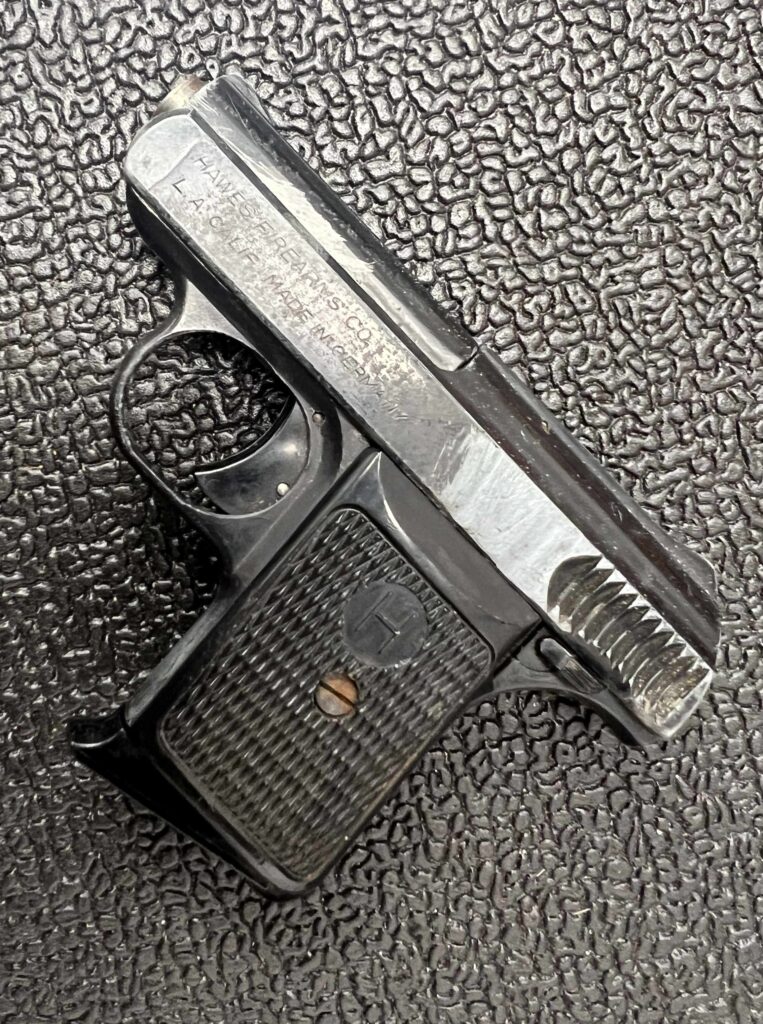
Beyond the serial number, most firearms carry a manufacturer’s name, logo, or “roll mark” stamped or rolled into the metal, typically on the barrel, slide, or receiver. Familiar American manufacturers like Winchester, Remington, and Colt usually stamp their full name and often a location (such as “New Haven, Conn.” or “Hartford, Conn.”) directly on the barrel or frame.
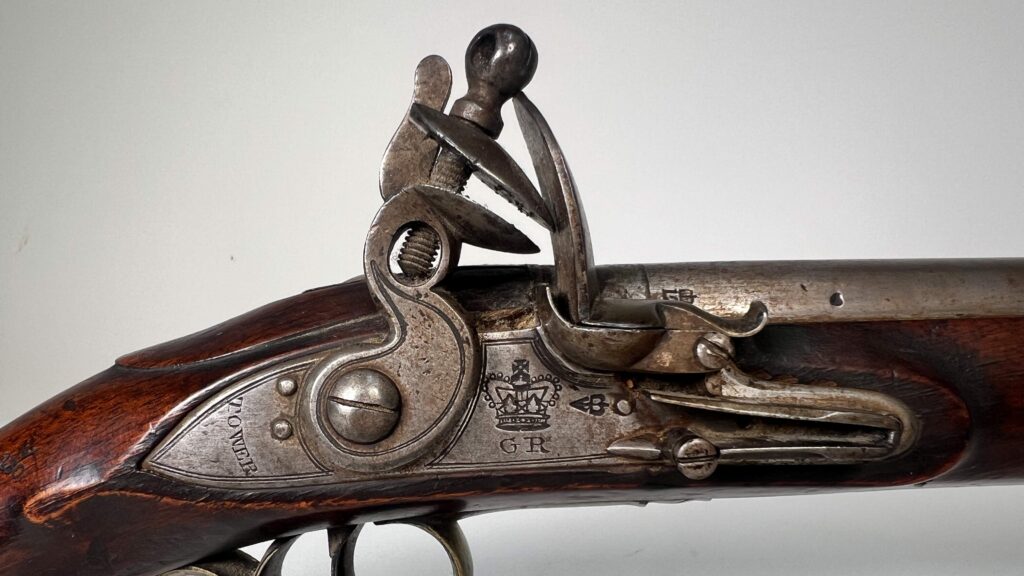
Foreign-made firearms often carry proof marks instead of, or in addition to, a manufacturer name. These are small stamped symbols (crowns, crossed flags, letter codes, or animal figures) that indicate the firearm passed a government or guild proofing test in its country of origin. Belgian, German, and Italian proof marks are among the most common found on older imported firearms and can help narrow down country of manufacture even when the maker’s name is unclear.
If the markings are faded, partially struck, or in a language you don’t recognize, don’t assume identification is a dead end. A professional familiar with historical proof marks and roll mark variations across decades of production can often still pin down the manufacturer and rough production era from a partial mark.
3. Note the Action Type
The action, meaning how a firearm loads, fires, and ejects, narrows down what you’re looking at even before you identify the exact model. A bolt-action has a handle you lift and pull back to cycle the action, common on hunting rifles and military surplus rifles from both World Wars. A lever-action has a loop or lever below the receiver, often associated with Winchester and Marlin rifles from the late 1800s through early 1900s. Pump-action (or “slide-action”) shotguns cycle by racking a forend back and forth. Break-action firearms hinge open at the barrel, common on older single and double-barrel shotguns. Semi-automatics cycle on their own using recoil or gas energy, firing one round per trigger pull. Revolvers rotate a cylinder to bring a new round in line with the barrel.
Action type also gives a rough sense of era and purpose. Lever-actions and older break-action shotguns often point toward late 19th or early 20th century manufacture, which can matter for both historical interest and value. Military bolt-action rifles frequently show additional clues like import marks or unit markings that help narrow things down further.
4. Check the Caliber or Gauge Stamp
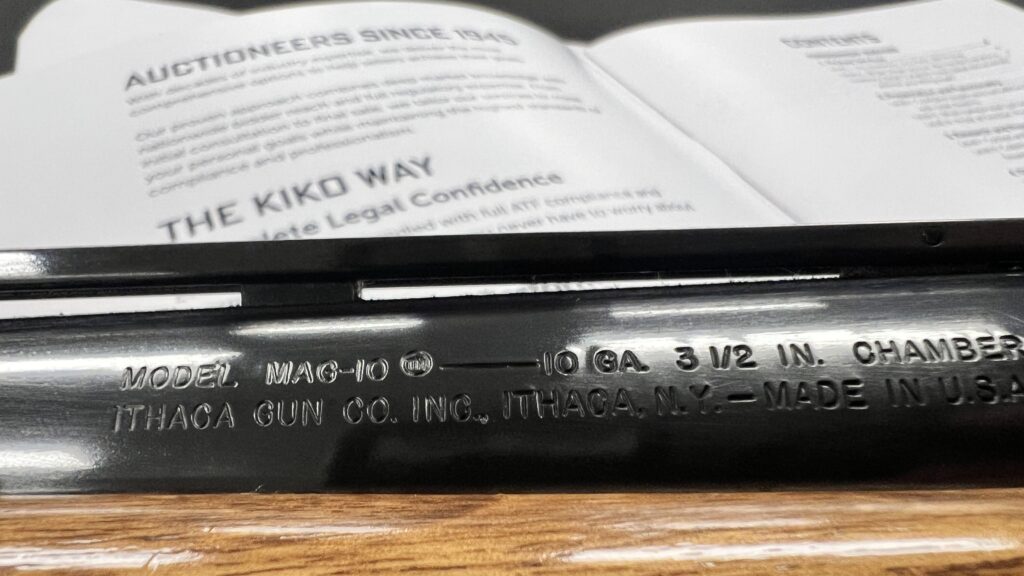
Caliber (for rifles and handguns) or gauge (for shotguns) is typically stamped on the barrel, often near the chamber end. This matters for two reasons. First, safety: firing the wrong ammunition, or ammunition in a firearm with an unconfirmed chamber, can cause serious injury from excess pressure or improper headspace. Never assume a caliber might fit simply based on what looks like.
Second, caliber can be a genuine value clue. Some inherited firearms turn out to be chambered in obsolete or discontinued calibers (such as .32-20, .38-40, or .25-20) that were common a century ago but are hard to find ammunition for today. Collectors sometimes seek these out specifically because they’re less common, which can affect value in either direction depending on the firearm and buyer interest. If the stamp is worn or ambiguous, this is a case where a professional should verify the exact chambering before anyone attempts to load or fire it.
5. Look for Import Marks
Import marks are required by federal law on firearms brought into the U.S. and typically include the importer’s name, city, state, and the country of origin, usually stamped on a barrel flat or the receiver. Common importer marks you might encounter include names like Century Arms International (often abbreviated C.A.I.) or Interarms, among others.
These marks are especially useful for identifying surplus military firearms, which make up a large share of imported inherited guns. A Mosin-Nagant, Mauser, or SKS rifle will often carry its original foreign military markings (arsenal stamps, acceptance marks, sometimes even unit or rack numbers) alongside a separate U.S. import stamp added when it entered the country. Having both sets of markings can help pin down not just the manufacturer, but the firearm’s military history, which is often a meaningful part of its story and, in some cases, its value.
6. Photograph It. Don’t Clean It.
Resist the urge to clean up an old firearm before it’s evaluated. Even light dusting with solvent or oil can remove original bluing, case coloring, or patina that collectors and appraisers look for. Once that finish is gone, it typically cannot be restored to its original state, and that loss can meaningfully affect value.
Instead, take clear, well-lit photos from multiple angles: both sides in full profile, close-ups of the serial number and any manufacturer markings, the action open (with the firearm safely unloaded and pointed in a safe direction), and any notable engraving, damage, or wear. Good photos give a professional a strong starting point for identification even before they see the firearm in person, and they’re useful documentation to have regardless of what you eventually decide to do with it.
7. Get A Professional Opinion Before Doing Anything Else
Once you’ve gathered what you can on your own, a professional evaluation is the safest next step, both for accurate identification and for confirming the firearm is safe to handle. This typically means bringing (or sending photos of) the firearm to a licensed dealer, an appraiser experienced with firearms, or an auction house that handles firearm consignments.
Bring what you have: your photos, any documentation or history you know about the firearm’s provenance, and details about who owned it and roughly when it was acquired, since family history can sometimes help narrow down timeframe or origin even when markings are unclear. A qualified professional can confirm the manufacturer, model, and potential value, verify it’s safe to handle, and walk you through next steps, whether that’s keeping it, selling it, or donating it.
Frequently Asked Questions
I found an old gun in my dad’s closet and have no idea what it is, what should I do first?
Start by leaving it exactly where it is and handling it as little as possible. Check whether it’s unloaded (if you don’t know how, don’t attempt to check yourself, treat it as loaded until someone who does know can verify), then look for a serial number, manufacturer markings, and caliber stamp without cleaning or disassembling anything. Take clear photos of what you find. From there, a licensed dealer or firearms appraiser can tell you what you actually have and whether it holds value.
What are common accessories needed for new firearm owners who inherit guns?
At minimum, a good gun safe or secure storage cabinet and a supply of trigger or cable locks are worth having right away, even before you’ve decided what to do with the firearm long-term. If you plan to keep and eventually use it, you’ll also want a properly fitted case for transport and, once a professional has confirmed it’s safe to fire, the correct ammunition for its exact caliber or gauge. Cleaning supplies are useful down the line, but hold off on cleaning an inherited firearm until it’s been evaluated, since premature cleaning can affect both value and any historical finish.
Who can help me navigate firearm inheritance as part of an estate?
Firearm inheritance often involves more than one type of professional, depending on what’s involved. An estate attorney can advise on any legal requirements tied to the transfer itself, particularly for regulated items. A licensed firearms dealer or appraiser can identify what you have and confirm its value. And an auction house experienced with firearm consignments, like KikoFirearms.com, can help if you decide to sell rather than keep the collection. Which combination you need usually depends on the size and complexity of the estate.
Identifying an inherited firearm doesn’t have to be a guessing game. A little patience and the right first steps – checking markings, noting the details, and resisting the urge to clean or fire it – can go a long way before you ever bring it to a professional. Whether it turns out to be a family keepsake or a piece worth far more than expected, taking the time to properly identify it is the best place to start.
Inherited a firearm? KIKO Auctioneers – Firearms specializes in helping families identify, appraise, and sell inherited firearm collections. Contact us for a professional opinion before you make any decisions.