You must be at least 18 years of age to enter this site. By entering our site, you affirm that you understand and comply with our age restrictions. If you are not 18+ years of age, please exit immediately. Thank you.
Conservation vs. Restoration: Why “Cleaning Up” an Old Gun Can Destroy Its Value
Key Takeaways: The collector market overwhelmingly rewards original condition over restored condition. Understanding the difference between conservation (preserving what’s already there) and restoration (recreating what was) is the most important decision an owner of an older firearm can make, because once originality is gone, it’s gone for good.
You pull an old rifle out of an estate. The metal is dark, the wood is dull, and there’s a layer of grime that’s been settling for fifty years. Your first instinct is to clean it up.
Pause.
That instinct, however well-meant, is how good firearms get turned into shooter-grade pieces overnight. The collector market is unforgiving about it, and the language around what most owners think they’re doing rarely matches what they’re actually about to do.
This piece walks through the difference between conservation and restoration, why the distinction matters, and how to decide what (if anything) an older firearm actually needs.
What’s the difference between cleaning, refinishing, and restoring a gun?
Cleaning, refinishing, and restoring are three different actions with three very different effects on value — and most damage to collector firearms happens because owners confuse them. The four terms below cover what you’re actually choosing between.
Conservation means stabilizing the firearm’s current state and arresting further deterioration. You’re not changing anything; you’re holding the line.
Cleaning means careful, surface-level care: removing dust, fingerprints, and old oil residue without altering the underlying finish, markings, or patina.
Refinishing means applying a modern process to old metal or wood. Hot bluing a rifle that originally wore cold blue. Sanding and polyurethaning a stock that originally had an oil finish. The gun ends up with a new finish, not its original one.
Restoration means period-correct work using factory-original methods and materials, executed by specialists who know the difference. Not the same as refinishing, even though the words get used interchangeably.
The first two protect value. The third almost always destroys it. The fourth occasionally adds value, but only under narrow conditions covered below.
Call before you act. Every time. Two minutes of conversation with someone who knows the piece can save you from a permanent mistake. -Chad Sylvester, KIKO Firearms Operations Manager
Why do refinished firearms lose collector value?
Refinished firearms lose value because the collector market treats an original gun as a historical document, and a refinish replaces that record with something new. Original finish, honest wear, and the marks of time are part of what buyers are actually paying for.
This isn’t sentiment. It’s how the market actually behaves.
A piece with most of its original finish intact can be worth substantially more than the same model refinished, sometimes more than double, sometimes far more than that. Refinished examples are generally treated as shooters rather than collectibles, and their collector value drops accordingly. Serious collectors, auction houses, and appraisers all price the same way.
The NRA Antique Firearms Condition Standards grade older firearms largely on the percentage of original finish remaining, with expected percentages sliding by era. A pre-1900 firearm is judged against very different baselines than a post-1945 firearm, but the principle holds: original is the standard, and everything else is a discount.
A clean refinish, even a beautiful one, doesn’t recover that value. In most cases it makes things worse.
Is patina the same as rust?
Short answer, no. Patina is a stable surface change that comes with age and helps protect the metal underneath, while active rust is destruction in progress. Telling them apart is the entire conservation question, and it’s not something most owners can answer confidently on their own.
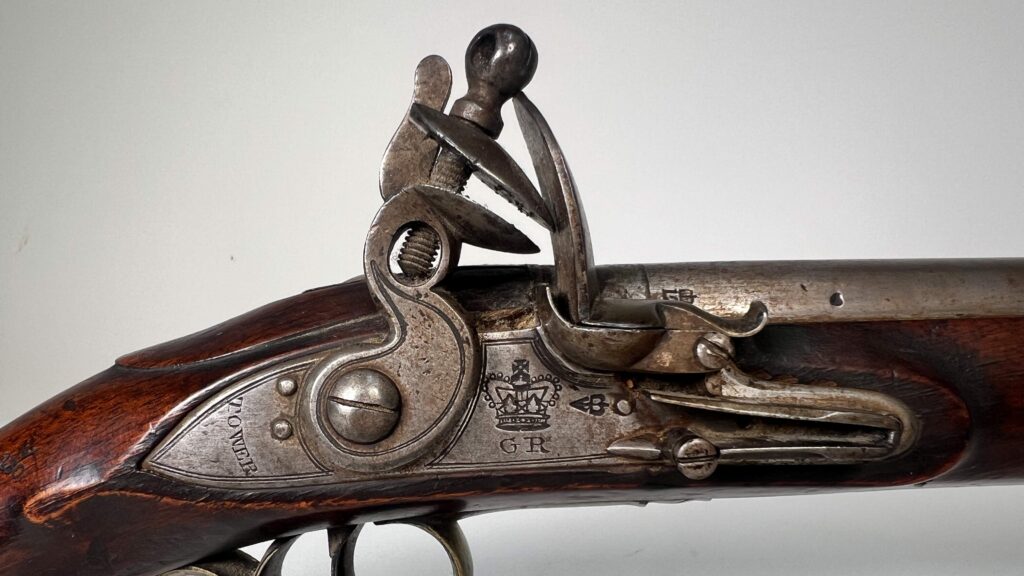
Patina is the natural color and surface change that comes with age. On metal, it’s the soft brown, grey, or smoky tone that develops on aged steel. On wood, it’s the deepening tone and softened sheen of a stock that’s been handled for decades. Done right by time, it’s protective and irreplaceable.
A stable oxide layer is part of the gun’s history and helps shield the metal underneath. Active red or orange rust is destruction in progress. Sometimes what looks like patina is corrosion hiding under decades of old oil and grime. Sometimes what looks like grime is a protective layer that should be left exactly where it is.
The difference matters. Stripping a real patina destroys collector value. Letting active rust progress destroys the gun itself.
When in doubt, do nothing. Don’t reach for the steel wool, the cold blue, or the sandpaper. Get the gun in front of someone qualified to tell you what you have before you commit to anything irreversible.
When is restoring an old firearm actually a good idea?
Restoration is the right call in a few narrow scenarios: when there’s no original finish left to preserve, when a previous bad refinish has already destroyed originality, when structural damage requires intervention, or when extreme rarity or documented provenance outweighs the originality penalty. Outside those situations, conservation almost always wins.
A useful checklist for when restoration may be appropriate:
The gun has so little original finish remaining that there’s nothing left to preserve
It has already been butchered by a previous bad refinish, so the originality is long gone
It’s pitted or rusted to the point of structural concern, not just cosmetic concern
The firearm is sentimental and intended for personal use rather than eventual sale; your goals don’t have to match the collector market’s
When restoration is the right call, done right is everything. Period-correct restoration means using the same processes the factory used. Rust blue on guns that originally wore rust blue. Color case hardening on guns that wore case colors. The same wood finish method the manufacturer used on the original stock. Modern hot blue on a 19th-century rifle isn’t restoration; it’s refinishing in a nicer outfit.
The handful of specialists who do this work properly aren’t the same as the local gunsmith who can “make it look new.” They use original methods and original materials, and they know which guns are worth restoring at all.
How should you preserve an older firearm?
Conservation is mostly about environment and restraint: store firearms in stable conditions around 40-50% relative humidity, handle them carefully, and resist the urge to alter anything. Most of the work is what you don’t do.
Wipe metal lightly with a soft, clean cloth to remove dust and skin oils after handling.
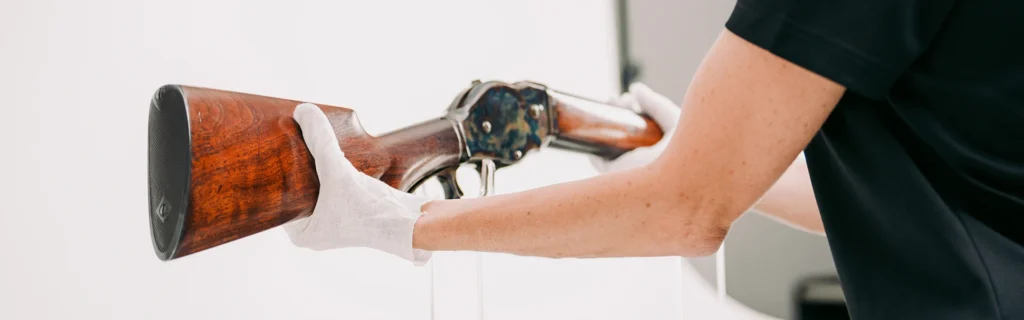
Wear clean cotton gloves when handling collector pieces you won’t be shooting. Skin oils can initiate corrosion on blued steel.
Apply a light coat of quality gun oil to bare metal, sparingly. A thin protective film, not a wet surface.
Keep wood stocks away from extreme dryness, direct sunlight, and rapid temperature changes.
The don’ts:
Don’t strip and refinish wood stocks. Original finishes, including arsenal markings and cartouches, are part of the gun’s identity.
Don’t apply cold blue to touch up worn spots. It rarely matches the original and tells any experienced collector exactly what happened.
Don’t use abrasive polish, steel wool, or solvents not formulated for firearms.
Don’t soak wooden parts in water or modern detergents.
Don’t try to make the gun “look new.” That’s not what serious collectors want, and it’s not what you should want either.
The shorter the list of things you do to an older firearm, the better off it usually is.
How can you tell if a firearm has been refinished?
Look for rounded edges where the factory left crisp ones, faint or partially worn roll marks, dished screw holes from over-polishing, and finish colors or sheens that don’t match what the factory used in that era. None of these alone are dealbreakers, but together they tell the story.
The full list of tells:
Edges that should be crisp are rounded or softened from polishing
Roll marks, serial numbers, or proof marks are faint or partially worn away
Screw holes appear “dished” from over-buffing
The finish color or sheen doesn’t match what the factory used in that era — modern hot-blue gloss on a gun that should have rust blue’s softer, deeper grain is a giveaway
Parts the factory left in the white are now blued
Wood stocks have a glossy modern finish instead of the original satin oil
Plenty of refinished firearms make perfectly good shooters. They just shouldn’t carry collector-grade prices, and being able to tell the difference is part of being a smart buyer.
Should you clean up an old gun before deciding what to do with it?
No. Never act before you know what you have. Before you do anything to an older firearm, ask three questions:
Do you actually know what you have? Maker, approximate age, rarity, and rough collector value all matter before any decision. If you don’t know, find out before you do anything else.
What’s your goal? A piece you’ll preserve, a piece you’ll shoot, or a piece you’ll eventually sell? Each pulls in a different direction.
Is what you’re about to do reversible? If not, stop. Sleep on it. Get a second opinion.
The instinct to clean up an old gun comes from a good place. Most owners want to honor the firearm. But the most respectful thing you can usually do to an heirloom is leave it alone. Store it well. Handle it carefully. Resist the urge to make it look like something it isn’t.
The history a firearm carries is part of what makes it valuable, and part of what makes it worth passing on. Don’t be the one who erases it.